
For decades, scientists have generally viewed the brain’s immune system as largely separate from the immune defenses operating throughout the rest of the body. The brain has its own specialized immune cells, along with the blood-brain barrier, which restricts many substances and cells from entering brain tissue.
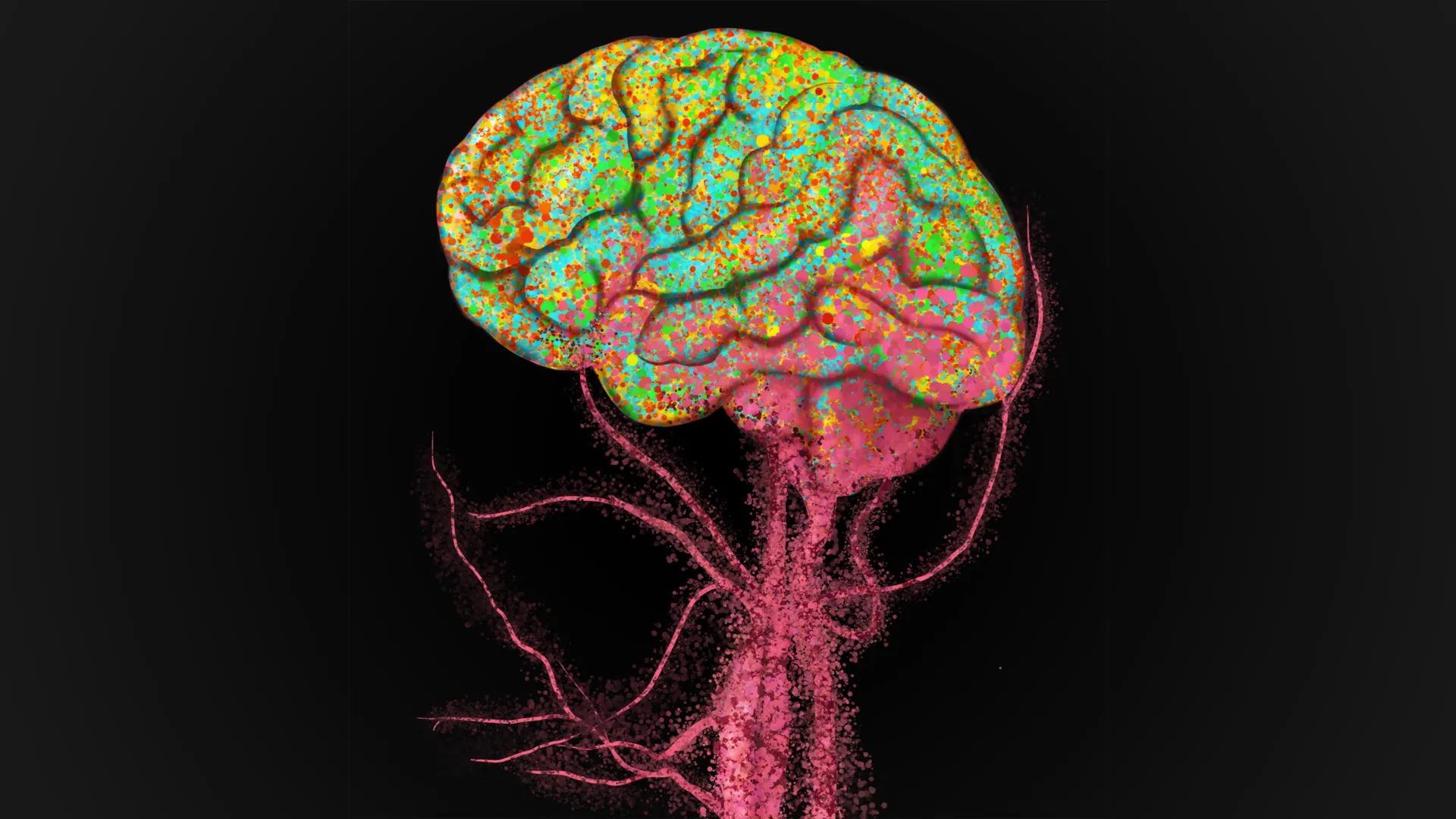
New research from Stanford is challenging that picture. Scientists found that large numbers of immune cells from elsewhere in the body enter the human brain as people age. The discovery could reshape scientists’ understanding of brain aging and may eventually create new possibilities for treating neurological diseases. The work, supported in part by the Knight Initiative for Brain Resilience at the Wu Tsai Neurosciences Institute, was published recently in the journal Nature.
“We usually think of the brain as a closed system,” said Julia Belk, a postdoctoral scholar in pathology at Stanford Medicine and first author on the new study. “What we found is that actually a lot of immune cells enter the human brain during aging.”
An Unexpected Path Into Brain Research
Belk’s interest in neuroscience began while she was a graduate student in the Department of Computer Science at Stanford Humanities and Sciences. During that time, she also trained through Sarafan ChEM-H’s Chemistry/Biology Interface Predoctoral Training Program. She has described that experience as important in shaping an interdisciplinary approach that combines basic science, computer science, and medicine.
That training eventually led to a collaboration with Siddhartha Jaiswal, a senior author of the new study, an associate professor of pathology at Stanford Medicine, and a member of the Institute for Stem Cell Biology and Regenerative Medicine.
In earlier work, the researchers examined genetic information from thousands of people, including some who had been followed for decades. The team showed that people carrying certain clones of immune cells produced by mutated blood stem cells were much less likely to develop Alzheimer’s. That result raised the possibility that these unusual immune cells might somehow be interacting with the brain.
The researchers later found evidence that some of the mutant cells could enter the brain itself. The mutations involved are associated with clonal hematopoiesis of indeterminate potential, a condition found in only a minority of people. Even so, the discovery led the team to ask a broader question: Could immune cells from the blood routinely enter the brains of people as they grow older?
“Unlike most immune cells, which are continuously replenished by blood stem cells from the bone marrow, immune cells in the brain were presumed to renew themselves throughout the lifespan without contribution from outside the brain,” said Jaiswal. “Our first study showed that this might not always be the case.”
Challenging a Longstanding View of Microglia
For years, many researchers believed that the brain’s specialized immune cells, known as microglia, were established at birth and remained a self-sustaining population throughout life. Under that model, immune cells from elsewhere in the body were not expected to migrate into the brain and become part of this population.
Belk and her colleagues began to consider a different possibility. If outside immune cells could enter the brain in some people, perhaps the process was not rare at all. It might instead be a regular feature of human aging.
The idea that blood-based immune cells could play a role in Alzheimer’s was both unusual and controversial. In 2022, Jaiswal and colleagues sought support from the Knight Initiative for Brain Resilience, which funds research intended to rethink how scientists study brain resilience and neurodegenerative disease.
With support in part from a Knight Initiative Innovation Award, Belk, Jaiswal, and co-senior author Howard Chang, the Virginia and D. K. Ludwig Professor of Cancer Research and a professor of genetics at Stanford Medicine, began investigating why peripheral immune cells appeared to increase resilience to Alzheimer’s. Before addressing that question, however, they first needed to determine whether immune cells from the blood truly could replenish microglia in the brain.
Tracing Immune Cells From Blood to Brain
To investigate, the researchers studied human brain tissue. They used samples from the Stanford Rapid Autopsy Center, which is led by co-author Jody Hooper, a professor of pathology at Stanford Medicine, as well as samples from the University of Washington’s Alzheimer’s Disease Sequencing Project.
These programs collect both blood and post-mortem brain tissue from people with and without Alzheimer’s. That combination gave the team an unusual chance to directly compare immune cells found in the bloodstream with those present in brain tissue after death.
The challenge was determining exactly where the immune cells inside the brain had originated. Because immune cells divide continuously, the scientists needed to trace their cellular family trees. Their goal was to distinguish cells descended from the original population of microglia that had been present since birth from cells descended from blood stem cells in the bone marrow later in life.
The researchers found a way to do this by comparing DNA from immune cells in the blood with DNA from immune cells in the brain. They used shared mutations as biological markers of ancestry, somewhat like a consumer ancestry testing service.
Random mutations gradually accumulate in blood stem cells as people age. Immune cells produced by those stem cells inherit the same mutations. As a result, if two groups of immune cells carry matching mutations, they are highly likely to share the same origin.
“If we see the same mutations in the blood and in the brain’s microglia, then we can be very confident that immune cells in the brain are descendants of those immune cells in the blood,” she said.
Using that approach and techniques developed during their 2023 research, Belk and her colleagues compared immune cells from paired blood and brain samples. The genetic signatures matched. The results showed that immune cells from the body had entered the brain, with the process occurring as early as middle age.
Further experiments revealed another striking development. Once the peripheral immune cells entered the brain, they transformed into specialized microglia. The researchers noted that this process does not appear to occur in other species such as mice or non-human primates.
A Possible New Route for Brain Immunotherapy
Beyond challenging established ideas about brain immunity, the finding could eventually provide a new strategy for developing treatments aimed at the brain.
“Now that we know that these immune cells actually can get into the brain, we can think about all kinds of new engineering strategies to have those peripheral immune cells do useful things.”
One possibility would be to engineer immune cells so they could target and break down amyloid and tau aggregates associated with neurodegenerative diseases. Such cells might eventually be given to people preventively, before those damaging aggregates begin accumulating.
The discovery could also broaden research into how the health and history of blood stem cells affect the brain. Because many microglia in aging humans appear to originate from blood stem cells, anything that changes cells in the blood or bone marrow could potentially influence the brain as well.
“Our findings suggest that the life history of blood stem cells could influence the risk of brain diseases by altering the microglia,” Jaiswal said.
For Belk, the results are also notable because they reveal an aspect of brain aging that appears to be distinctly human.
“I think this is exciting because this is also a uniquely human feature of aging that we had no idea about.”