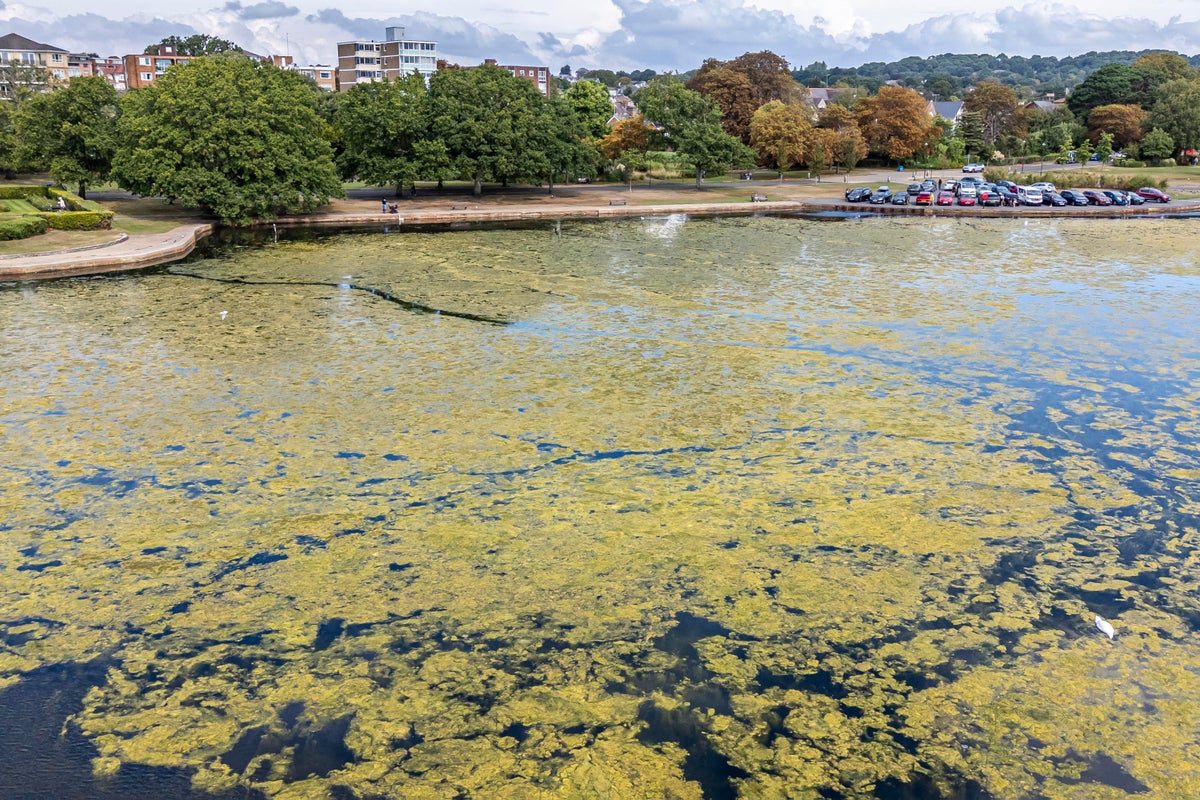
A picturesque boating lake in Dorset has been covered in green algae, as nearby businesses have reported a dip in sales due to the “disgusting” outbreak.
The 50-acre lake in Poole Park, Dorset, has been taken over by green slime, as a result of essential works to rebuild the lake’s sluice channel and the hot weather.
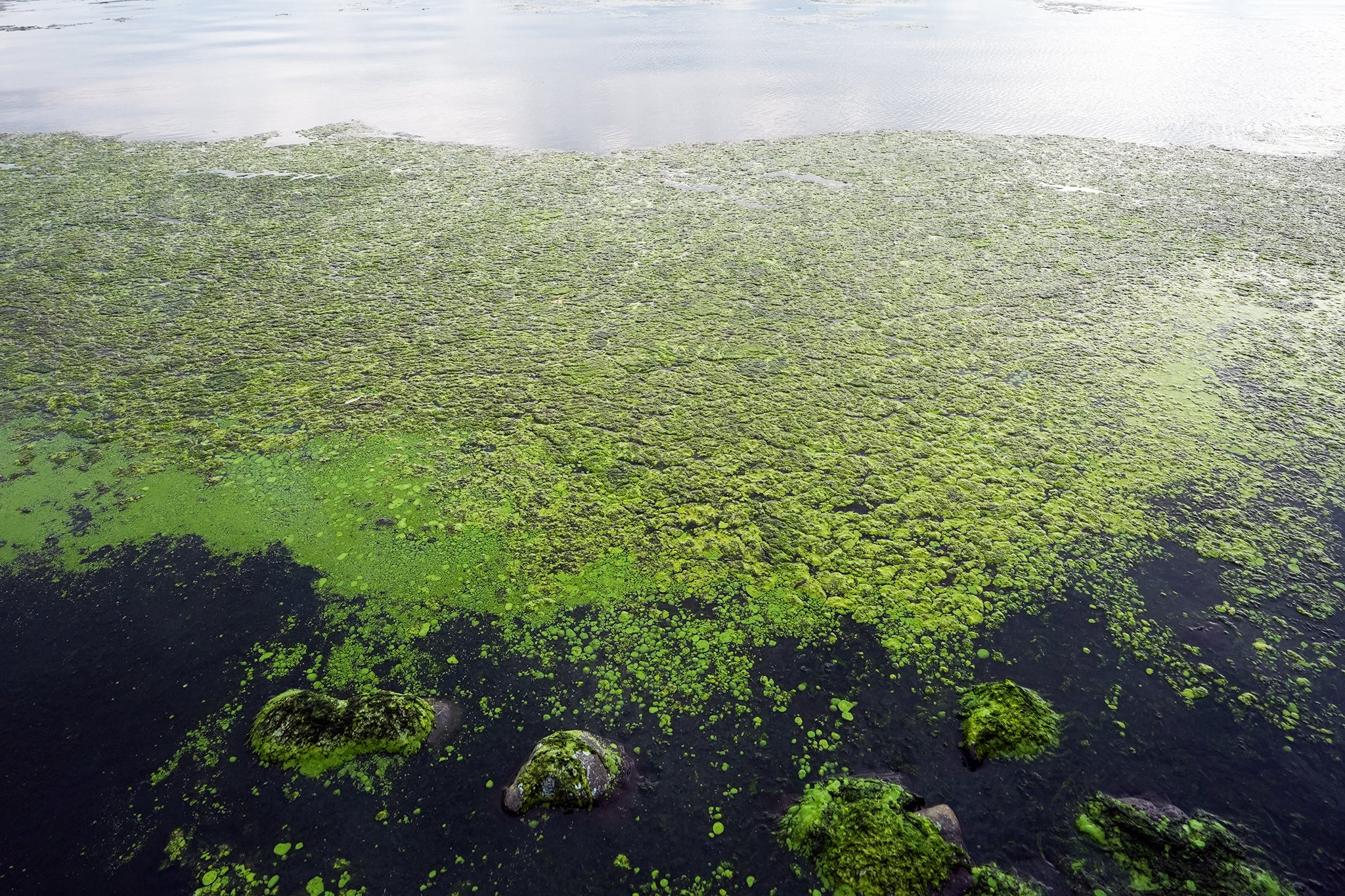
According to the Environment Agency (EA), during an algal bloom the water becomes less clear and may become blue-green or greenish-brown.
Cyanobacteria or ‘blue-green algae’, a type of blooming algae, can produce toxins. These toxins can kill wild animals, livestock and pets.
They can also harm people, producing rashes after skin contact and illnesses if swallowed.
One restaurant by the lake said trade was down by 65 per cent.
Nick Davies, a restaurant and cafe owner at the park, told the Mail: “Turnover is down because nobody is coming to the park and why would they? It stinks and it is disgusting.
“The algae has been allowed to remain and it multiplies and multiplies.”
The Mail also reported that members of a model boat club can no longer sail their miniatures in the lake due to the slimy surface.
Recently, London’s first official bathing spot was hit by a toxic algal bloom, as swimmers were warned to avoid the river.
Ham and Kingston on the Thames was made a bathing spot in May this year, but the EA warned against swimming in the spot in August.
It comes as a sobering new assessment has revealed that a mere 14 per cent of England’s rivers, lakes, and coastal waters are currently in good ecological health.
The findings come from the Environment Agency’s first update in six years, conducted under retained EU legislation governing water quality.
Cllr Andy Hadley, Bournemouth, Christchurch and Poole Council’s Portfolio Holder for Climate Response, Environment and Energy, said: “We know how much residents and visitors value Poole Park and understand concerns about the build-up of algae in the lagoon during the recent prolonged spell of hot weather.
“Our teams are carrying out targeted work to remove excess algae where practical, helping to keep the park attractive and enjoyable for people to use. Further sessions are planned over the coming weeks, and we will continue to monitor how effective this work is.
“We have also continued to flush the lagoon during suitable spring tides, when conditions in Poole Harbour allow. There is also excessive algal growth in other shallow areas of the harbour, due to the prolonged hot weather.
“We will keep the situation under review and take further appropriate action where needed.”