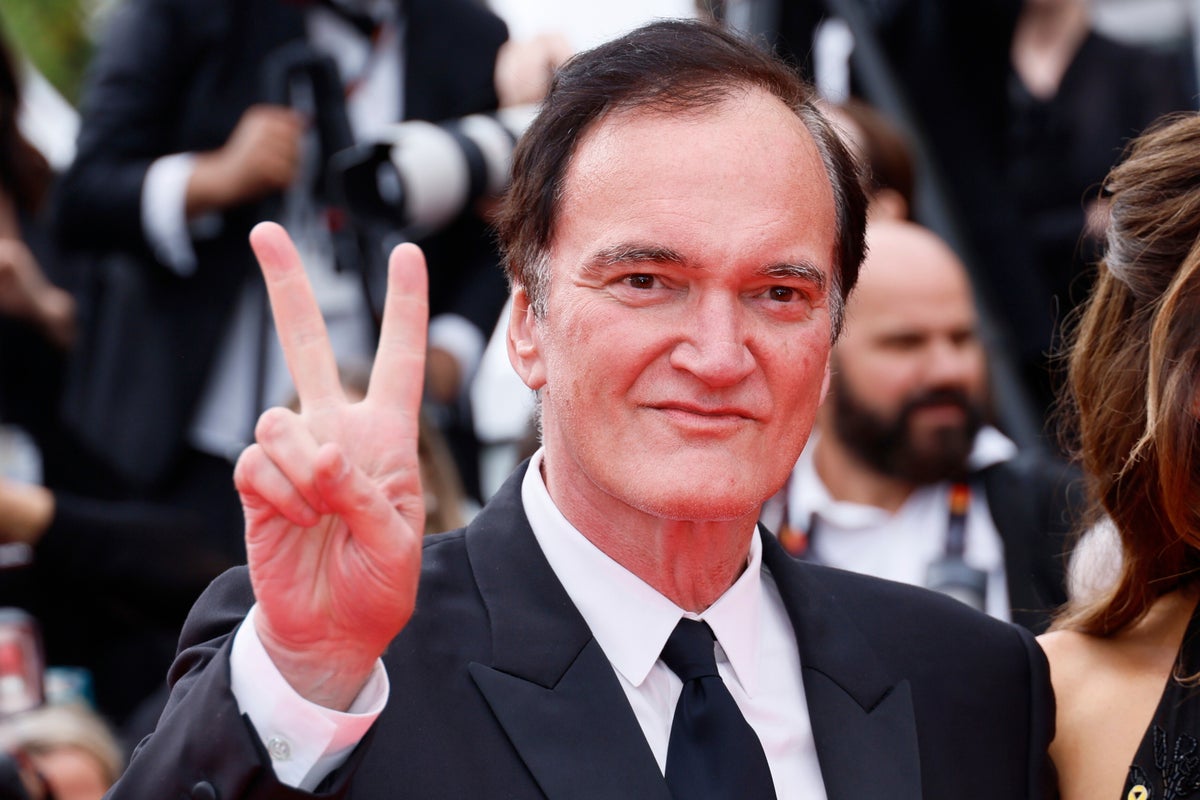
While Quentin Tarantino has stepped back from directing in recent years, he continues to build his literary career.
An upcoming spin-off from “Once Upon a Time … in Hollywood” will be released alongside Tarantino’s novelisation of the story.
The Oscar-winning filmmaker’s second novelisation, The Adventures of Cliff Booth, arrives on 8 December. It represents Tarantino’s adaptation of The Further Mis-Adventures of Cliff Booth, featuring Brad Pitt as the former Hollywood stuntman.
David Fincher directs from Tarantino’s script, following his earlier novelised version of Once Upon a Time … in Hollywood.
Publisher Harper, an imprint of HarperCollins, said the book “offers Tarantino’s own creative vision for this story in novel form.”
“Can’t wait for audiences to see and read Cliff Booth’s further adventures,” Tarantino said in a statement released Tuesday by Harper.

In the first book, Tarantino answered one of the biggest mysteries about Once Upon a Time… in Hollywood.
In the movie, Pitt’s character Cliff Booth is implied to have potentially killed his wife, although the film leaves this particular plot point open-ended.
The novel, however, takes a much more definitive approach.

Watch Apple TV+ free for 7 day
New subscribers only. £9.99/mo. after free trial. Plan auto-renews until cancelled.
ADVERTISEMENT. If you sign up to this service we will earn commission. This revenue helps to fund journalism across The Independent.
In the book, Tarantino clearly states that Booth got away with murder several times.
“The second time was when Cliff killed his wife two years earlier,” he writes, confirming that Booth did, in fact, commit the murder.
Before the novel’s release, Pitt had told the LA Times that he knew whether his character had killed his wife, but declined to reveal the answer.
“That, I will never tell,” he told the newspaper in 2019.
Best known for features including Pulp Fiction, Inglourious Basterds and Reservoir Dogs, Tarantino last directed with 2019’s Once Upon a Time … in Hollywood. Since then, he has penned the two novelisations and a work of film criticism and autobiography, Cinema Speculation.