

It played an integral role
The Piccadilly line was integral to Great Britain’s war effort. When the Nazis reduced much of London to rubble during the Blitz during the Second World War, there was a concern that priceless treasures – like artefacts – would be lost too.
So naturally it made perfect sense to store our rare goods below ground, in the hope Hitler’s bombs wouldn’t leave insanely deep craters. That’s where the Piccadilly line comes into play.
It runs from Cockfosters, either to Heathrow Airport, or Uxbridge, depending on which branch you take. There are 53 stations on the line, 25 of which are deep underground.
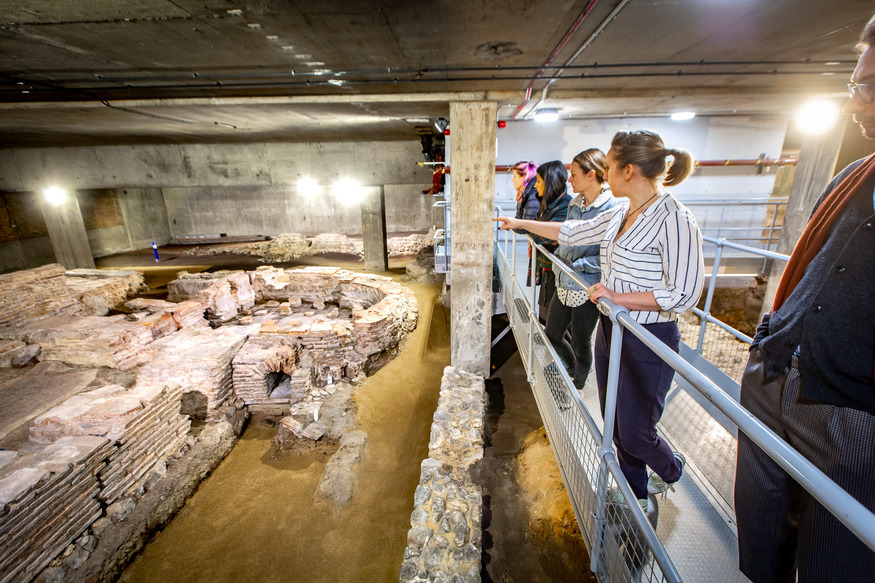
As a result, it was decided the Holborn to Aldwych section of the line, which plunges 41.1 metres (135 feet) below the surface, would be the perfect spot to store national goods. But that wasn’t the only part of the line which was used in the war.
The disused Brompton Road station was used as the command centre of the 26th (London) Anti-Aircraft brigade.
There are other disused stations on the dark blue line too, such as York Road, Aldwych, Down Street, Park Royal & Twyford Abbey, Osterly & Spring Grove, and Hounslow Town.
The abandoned stops have become popular destinations for urban explorers, but many are now being sold off to private developers to become housing and commercial properties. Aldwych is also used fairly often for filming.
The Piccadilly line spans 45.96 miles (73.97 km) and first opened in December 1906, and in 1977 became the first Tube station in the world to connect to an airport.
It also bears the shortest distance between any two adjacent station on the entire network. The distance between Leicester Square and Covent Garden is just 300 metres.
Twenty six of the stations were designed by legendary Tube architect Charles Holden, including stations such as Arnos Grove and Southgate.
Looking for more from MyLondon? Subscribe to our daily newsletters here for the latest and greatest updates from across London.